

Pricing and Comparison
What home security systems cost, what drives the price and how the main options compare.
Home security system pricing
See what equipment, monitoring, installation and contract terms really add up to over three to five years, then compare your options with simple calculators.
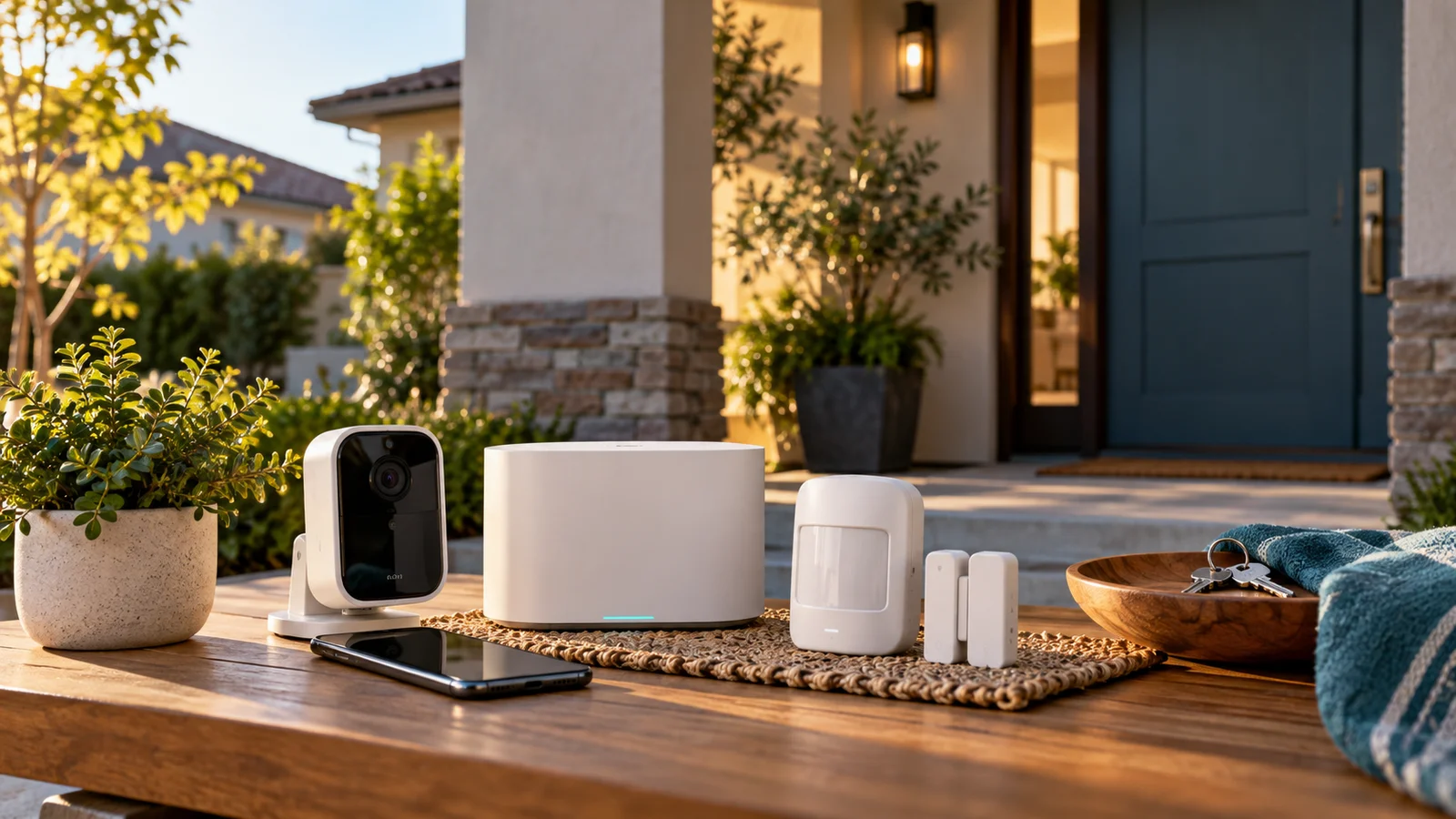
What home security systems cost, what drives the price and how the main options compare.

Step-by-step guidance for choosing a provider, signing up, installing and living with a system.
Common errors, red flags, false-alarm rules and honest answers about whether a system is worth it.
Pricing and Comparison
Compare DIY and professionally installed home security systems on upfront cost, monthly fees, flexibility, reliability and who is responsible when something fails.
Pricing and Comparison
How much a home security system costs in 2026: equipment, installation, monthly monitoring and contract terms, with illustrative ranges and a simple way to add them up.
Getting Started and Using It
A practical seven-step process for getting a home security system: assess your risks, set a budget, choose a type, compare quotes, sign, install and test.
Pricing and Comparison
Practical ways to lower what you pay for a home security system: comparing written quotes, negotiating fees, reading promotions and avoiding contract traps.
Mistakes, Scams and FAQ
A balanced look at whether a home security system is worth the money: what it does and does not protect against, insurance discounts, costs over time and who benefits most.
Mistakes, Scams and FAQ
Warning signs of deceptive home security sales, from door-to-door pressure to fake affiliations, plus your cancellation rights and where to report problems.

Estimate an equipment and installation range based on system type and number of devices.

See the monthly payment and total paid when equipment is financed over a multi-year contract.

Estimate how long a homeowners insurance discount takes to offset what you spend on a system.

A checklist to complete before you accept any home security quote or sign a monitoring contract.
| Option | How it works | Good for | Watch out for |
|---|---|---|---|
| DIY wireless kit with self-monitoring | You place battery-powered sensors and a hub yourself, and alerts go to your phone. No professional monitoring. | Renters, small budgets, people who can respond to alerts themselves | Nobody dispatches help if you miss the alert; app or subscription fees may apply for video history |
| DIY kit with optional professional monitoring | Same self-installed hardware, with a monthly plan that adds a monitoring center and dispatch. | Owners and renters who want low upfront cost but 24/7 response | Plan terms vary; confirm what happens during an internet outage and whether cellular backup is included |
| Professionally installed wireless system | A technician installs and tests battery-powered sensors and a panel, usually with a monitoring contract. | Larger homes, people who want setup done for them | Multi-year contract, equipment financed into the bill, early termination fees |
| Hardwired system | Sensors are wired to a panel, usually installed during construction or a major remodel. | New builds and renovations with open walls | Higher installation cost, harder to move, wiring needs a licensed professional |
It depends on the home size, the type of system and the monitoring plan. Think in three parts: equipment, installation or activation, and a monthly monitoring fee. The cost guide gives illustrative ranges and a method for adding them up over the contract term.
No. Some providers sell month-to-month service and some sell DIY equipment you own outright. Others offer discounted or financed equipment in return for a multi-year agreement. Ask for the contract length and the early termination terms before you agree.
It depends on whether anyone could respond to an alert when you are away or asleep. Professional monitoring adds a staffed center that can contact you and dispatch help. Self-monitoring is cheaper but relies on you noticing and acting.
Many insurers offer a discount for monitored systems, but the amount and conditions vary by company and state. Ask your agent which type of system qualifies and what proof is required, and see the insurance discount calculator.
Yes. Wireless, adhesive-mounted kits are popular with renters because they need little or no drilling and can move with you. Check your lease and get landlord permission if you will attach anything to common areas or outside walls.
A system that relies only on home internet may lose its connection to the monitoring center. Look for cellular backup and a battery backup so the panel keeps working during outages, and ask how the provider notifies you if it goes offline.
They can be. Many cities charge fines for repeated false alarms or require an alarm permit. Learn your local rules, train everyone in the home on the disarm code and use verification features offered by your monitoring plan.
Be cautious of unsolicited door-to-door pitches, pressure to sign immediately, claims of being affiliated with your current provider or neighborhood, and refusal to give a written quote. Read the red flags guide before you sign anything.
Porchlight Notes is an independent information project. Guides are drafted with the help of AI writing tools and checked against official and primary sources before publication; see our Editorial Policy. We are not affiliated with any provider mentioned on the site and do not sell products or services.